
#include "stm32h7xx_hal.h"
#include "lwip/netif.h"

#define ETH_RX_DESC_CNT   4U
#define ETH_TX_DESC_CNT   4U
#define PHY_ADDR          0x00U

ETH_DMADescTypeDef dma_rx[ETH_RX_DESC_CNT] __attribute__((section(".RxDecripSection")));
ETH_DMADescTypeDef dma_tx[ETH_TX_DESC_CNT] __attribute__((section(".TxDecripSection")));

static ETH_HandleTypeDef heth;
static ETH_TxPacketConfig tx_config;

HAL_StatusTypeDef eth_init(const uint8_t mac[6])
{
    heth.Instance = ETH;
    heth.Init.MACAddr = (uint8_t *)mac;
    heth.Init.MediaInterface = HAL_ETH_RMII_MODE;
    heth.Init.RxDesc = dma_rx;
    heth.Init.TxDesc = dma_tx;
    heth.Init.RxBuffLen = 1536;

    if (HAL_ETH_Init(&heth) != HAL_OK) {
        return HAL_ERROR;
    }

    tx_config.Attributes = ETH_TX_PACKETS_FEATURES_CSUM | ETH_TX_PACKETS_FEATURES_CRCPAD;
    tx_config.ChecksumCtrl = ETH_CHECKSUM_IPHDR_PAYLOAD_INSERT_PHDR_CALC;
    tx_config.CRCPadCtrl = ETH_CRC_PAD_INSERT;

    uint32_t bsr = 0;
    HAL_ETH_ReadPHYRegister(&heth, PHY_ADDR, PHY_BSR, &bsr);
    if ((bsr & PHY_LINKED_STATUS) == 0U) {
        return HAL_TIMEOUT;
    }
    return HAL_ETH_Start_IT(&heth);
}

void ETH_IRQHandler(void)
{
    HAL_ETH_IRQHandler(&heth);
}

void HAL_ETH_RxCpltCallback(ETH_HandleTypeDef *h)
{
    BaseType_t woken = pdFALSE;
    vTaskNotifyGiveFromISR(rx_task, &woken);
    portYIELD_FROM_ISR(woken);
}"""Production test bench: flash, power, Ethernet link and throughput."""
import socket
import time
import pytest
from bench import Board, PowerSupply, Programmer
LIMITS = {"vdd_3v3": (3.25, 3.35), "idle_ma": (40, 95)}
@pytest.fixture(scope="module")
def board():
psu = PowerSupply("/dev/ttyUSB0")
psu.set(voltage=5.0, current_limit=0.5)
with Board(psu, Programmer("stlink")) as dut:
dut.flash("build/firmware.elf", verify=True)
dut.reset()
yield dut
@pytest.mark.parametrize("rail", ["vdd_3v3"])
def test_power_rails(board, rail):
low, high = LIMITS[rail]
assert low <= board.measure(rail) <= high
def test_idle_current(board):
low, high = LIMITS["idle_ma"]
assert low <= board.psu.current_ma(samples=20) <= high
def test_ethernet_link(board):
deadline = time.monotonic() + 5
while not board.link_up():
assert time.monotonic() < deadline, "no PHY link after 5 s"
time.sleep(0.1)
def test_udp_echo_throughput(board):
payload = bytes(range(256)) * 4
with socket.socket(socket.AF_INET, socket.SOCK_DGRAM) as sock:
sock.settimeout(0.5)
start = time.perf_counter()
for _ in range(1000):
sock.sendto(payload, (board.ip, 7))
assert sock.recv(2048) == payload
mbps = len(payload) * 8 * 1000 / (time.perf_counter() - start) / 1e6
assert mbps > 20#include "stm32h7xx_hal.h"
#include "lwip/netif.h"
#define ETH_RX_DESC_CNT 4U
#define ETH_TX_DESC_CNT 4U
#define PHY_ADDR 0x00U
ETH_DMADescTypeDef dma_rx[ETH_RX_DESC_CNT] __attribute__((section(".RxDecripSection")));
ETH_DMADescTypeDef dma_tx[ETH_TX_DESC_CNT] __attribute__((section(".TxDecripSection")));
static ETH_HandleTypeDef heth;
static ETH_TxPacketConfig tx_config;
HAL_StatusTypeDef eth_init(const uint8_t mac[6])
{
heth.Instance = ETH;
heth.Init.MACAddr = (uint8_t *)mac;
heth.Init.MediaInterface = HAL_ETH_RMII_MODE;
heth.Init.RxDesc = dma_rx;
heth.Init.TxDesc = dma_tx;
heth.Init.RxBuffLen = 1536;
if (HAL_ETH_Init(&heth) != HAL_OK) {
return HAL_ERROR;
}
tx_config.Attributes = ETH_TX_PACKETS_FEATURES_CSUM | ETH_TX_PACKETS_FEATURES_CRCPAD;
tx_config.ChecksumCtrl = ETH_CHECKSUM_IPHDR_PAYLOAD_INSERT_PHDR_CALC;
tx_config.CRCPadCtrl = ETH_CRC_PAD_INSERT;
uint32_t bsr = 0;
HAL_ETH_ReadPHYRegister(&heth, PHY_ADDR, PHY_BSR, &bsr);
if ((bsr & PHY_LINKED_STATUS) == 0U) {
return HAL_TIMEOUT;
}
return HAL_ETH_Start_IT(&heth);
}
void ETH_IRQHandler(void)
{
HAL_ETH_IRQHandler(&heth);
}
void HAL_ETH_RxCpltCallback(ETH_HandleTypeDef *h)
{
BaseType_t woken = pdFALSE;
vTaskNotifyGiveFromISR(rx_task, &woken);
portYIELD_FROM_ISR(woken);
}"""Production test bench: flash, power, Ethernet link and throughput."""
import socket
import time
import pytest
from bench import Board, PowerSupply, Programmer
LIMITS = {"vdd_3v3": (3.25, 3.35), "idle_ma": (40, 95)}
@pytest.fixture(scope="module")
def board():
psu = PowerSupply("/dev/ttyUSB0")
psu.set(voltage=5.0, current_limit=0.5)
with Board(psu, Programmer("stlink")) as dut:
dut.flash("build/firmware.elf", verify=True)
dut.reset()
yield dut
@pytest.mark.parametrize("rail", ["vdd_3v3"])
def test_power_rails(board, rail):
low, high = LIMITS[rail]
assert low <= board.measure(rail) <= high
def test_idle_current(board):
low, high = LIMITS["idle_ma"]
assert low <= board.psu.current_ma(samples=20) <= high
def test_ethernet_link(board):
deadline = time.monotonic() + 5
while not board.link_up():
assert time.monotonic() < deadline, "no PHY link after 5 s"
time.sleep(0.1)
def test_udp_echo_throughput(board):
payload = bytes(range(256)) * 4
with socket.socket(socket.AF_INET, socket.SOCK_DGRAM) as sock:
sock.settimeout(0.5)
start = time.perf_counter()
for _ in range(1000):
sock.sendto(payload, (board.ip, 7))
assert sock.recv(2048) == payload
mbps = len(payload) * 8 * 1000 / (time.perf_counter() - start) / 1e6
assert mbps > 20"""Triage failing test reports with an LLM, then open a ticket per root cause."""
from dataclasses import dataclass
from pathlib import Path
import anthropic
client = anthropic.Anthropic()
@dataclass
class Failure:
test: str
log: str
def load_failures(report: Path) -> list[Failure]:
failures = []
for case in parse_junit(report):
if case.failed:
failures.append(Failure(case.name, case.output[-4000:]))
return failures
def triage(failures: list[Failure]) -> dict[str, list[str]]:
prompt = "Group these failures by probable root cause:\n\n" + "\n---\n".join(
f"{f.test}\n{f.log}" for f in failures
)
answer = client.messages.create(
model="claude-sonnet-5-5",
max_tokens=2000,
tools=[ROOT_CAUSE_SCHEMA],
messages=[{"role": "user", "content": prompt}],
)
return extract_groups(answer)
def main() -> None:
failures = load_failures(Path("reports/nightly.xml"))
for cause, tests in triage(failures).items():
tracker.open_issue(title=cause, body="\n".join(tests), labels=["nightly"])
print(f"{len(failures)} failures triaged")
if __name__ == "__main__":
main()/* Lock-free single-producer, single-consumer ring buffer. */
#include <stdint.h>
#include <stdbool.h>
#define RB_SIZE 256U /* power of two */
typedef struct {
volatile uint32_t head;
volatile uint32_t tail;
uint8_t data[RB_SIZE];
} ring_t;
static inline bool rb_push(ring_t *rb, uint8_t byte)
{
uint32_t next = (rb->head + 1U) & (RB_SIZE - 1U);
if (next == rb->tail) {
return false; /* full: drop, never block in an ISR */
}
rb->data[rb->head] = byte;
__DMB();
rb->head = next;
return true;
}
static inline bool rb_pop(ring_t *rb, uint8_t *byte)
{
if (rb->tail == rb->head) {
return false;
}
*byte = rb->data[rb->tail];
__DMB();
rb->tail = (rb->tail + 1U) & (RB_SIZE - 1U);
return true;
}
void USART3_IRQHandler(void)
{
if (USART3->ISR & USART_ISR_RXNE_RXFNE) {
rb_push(&uart_rx, (uint8_t)USART3->RDR);
}
if (USART3->ISR & USART_ISR_ORE) {
USART3->ICR = USART_ICR_ORECF;
stats.overruns++;
}
}"""Triage failing test reports with an LLM, then open a ticket per root cause."""
from dataclasses import dataclass
from pathlib import Path
import anthropic
client = anthropic.Anthropic()
@dataclass
class Failure:
test: str
log: str
def load_failures(report: Path) -> list[Failure]:
failures = []
for case in parse_junit(report):
if case.failed:
failures.append(Failure(case.name, case.output[-4000:]))
return failures
def triage(failures: list[Failure]) -> dict[str, list[str]]:
prompt = "Group these failures by probable root cause:\n\n" + "\n---\n".join(
f"{f.test}\n{f.log}" for f in failures
)
answer = client.messages.create(
model="claude-sonnet-5-5",
max_tokens=2000,
tools=[ROOT_CAUSE_SCHEMA],
messages=[{"role": "user", "content": prompt}],
)
return extract_groups(answer)
def main() -> None:
failures = load_failures(Path("reports/nightly.xml"))
for cause, tests in triage(failures).items():
tracker.open_issue(title=cause, body="\n".join(tests), labels=["nightly"])
print(f"{len(failures)} failures triaged")
if __name__ == "__main__":
main()/* Lock-free single-producer, single-consumer ring buffer. */
#include <stdint.h>
#include <stdbool.h>
#define RB_SIZE 256U /* power of two */
typedef struct {
volatile uint32_t head;
volatile uint32_t tail;
uint8_t data[RB_SIZE];
} ring_t;
static inline bool rb_push(ring_t *rb, uint8_t byte)
{
uint32_t next = (rb->head + 1U) & (RB_SIZE - 1U);
if (next == rb->tail) {
return false; /* full: drop, never block in an ISR */
}
rb->data[rb->head] = byte;
__DMB();
rb->head = next;
return true;
}
static inline bool rb_pop(ring_t *rb, uint8_t *byte)
{
if (rb->tail == rb->head) {
return false;
}
*byte = rb->data[rb->tail];
__DMB();
rb->tail = (rb->tail + 1U) & (RB_SIZE - 1U);
return true;
}
void USART3_IRQHandler(void)
{
if (USART3->ISR & USART_ISR_RXNE_RXFNE) {
rb_push(&uart_rx, (uint8_t)USART3->RDR);
}
if (USART3->ISR & USART_ISR_ORE) {
USART3->ICR = USART_ICR_ORECF;
stats.overruns++;
}
}/* Lock-free single-producer, single-consumer ring buffer. */
#include <stdint.h>
#include <stdbool.h>
#define RB_SIZE 256U /* power of two */
typedef struct {
volatile uint32_t head;
volatile uint32_t tail;
uint8_t data[RB_SIZE];
} ring_t;
static inline bool rb_push(ring_t *rb, uint8_t byte)
{
uint32_t next = (rb->head + 1U) & (RB_SIZE - 1U);
if (next == rb->tail) {
return false; /* full: drop, never block in an ISR */
}
rb->data[rb->head] = byte;
__DMB();
rb->head = next;
return true;
}
static inline bool rb_pop(ring_t *rb, uint8_t *byte)
{
if (rb->tail == rb->head) {
return false;
}
*byte = rb->data[rb->tail];
__DMB();
rb->tail = (rb->tail + 1U) & (RB_SIZE - 1U);
return true;
}
void USART3_IRQHandler(void)
{
if (USART3->ISR & USART_ISR_RXNE_RXFNE) {
rb_push(&uart_rx, (uint8_t)USART3->RDR);
}
if (USART3->ISR & USART_ISR_ORE) {
USART3->ICR = USART_ICR_ORECF;
stats.overruns++;
}
}#include "stm32h7xx_hal.h"
#include "lwip/netif.h"
#define ETH_RX_DESC_CNT 4U
#define ETH_TX_DESC_CNT 4U
#define PHY_ADDR 0x00U
ETH_DMADescTypeDef dma_rx[ETH_RX_DESC_CNT] __attribute__((section(".RxDecripSection")));
ETH_DMADescTypeDef dma_tx[ETH_TX_DESC_CNT] __attribute__((section(".TxDecripSection")));
static ETH_HandleTypeDef heth;
static ETH_TxPacketConfig tx_config;
HAL_StatusTypeDef eth_init(const uint8_t mac[6])
{
heth.Instance = ETH;
heth.Init.MACAddr = (uint8_t *)mac;
heth.Init.MediaInterface = HAL_ETH_RMII_MODE;
heth.Init.RxDesc = dma_rx;
heth.Init.TxDesc = dma_tx;
heth.Init.RxBuffLen = 1536;
if (HAL_ETH_Init(&heth) != HAL_OK) {
return HAL_ERROR;
}
tx_config.Attributes = ETH_TX_PACKETS_FEATURES_CSUM | ETH_TX_PACKETS_FEATURES_CRCPAD;
tx_config.ChecksumCtrl = ETH_CHECKSUM_IPHDR_PAYLOAD_INSERT_PHDR_CALC;
tx_config.CRCPadCtrl = ETH_CRC_PAD_INSERT;
uint32_t bsr = 0;
HAL_ETH_ReadPHYRegister(&heth, PHY_ADDR, PHY_BSR, &bsr);
if ((bsr & PHY_LINKED_STATUS) == 0U) {
return HAL_TIMEOUT;
}
return HAL_ETH_Start_IT(&heth);
}
void ETH_IRQHandler(void)
{
HAL_ETH_IRQHandler(&heth);
}
void HAL_ETH_RxCpltCallback(ETH_HandleTypeDef *h)
{
BaseType_t woken = pdFALSE;
vTaskNotifyGiveFromISR(rx_task, &woken);
portYIELD_FROM_ISR(woken);
}"""Production test bench: flash, power, Ethernet link and throughput."""
import socket
import time
import pytest
from bench import Board, PowerSupply, Programmer
LIMITS = {"vdd_3v3": (3.25, 3.35), "idle_ma": (40, 95)}
@pytest.fixture(scope="module")
def board():
psu = PowerSupply("/dev/ttyUSB0")
psu.set(voltage=5.0, current_limit=0.5)
with Board(psu, Programmer("stlink")) as dut:
dut.flash("build/firmware.elf", verify=True)
dut.reset()
yield dut
@pytest.mark.parametrize("rail", ["vdd_3v3"])
def test_power_rails(board, rail):
low, high = LIMITS[rail]
assert low <= board.measure(rail) <= high
def test_idle_current(board):
low, high = LIMITS["idle_ma"]
assert low <= board.psu.current_ma(samples=20) <= high
def test_ethernet_link(board):
deadline = time.monotonic() + 5
while not board.link_up():
assert time.monotonic() < deadline, "no PHY link after 5 s"
time.sleep(0.1)
def test_udp_echo_throughput(board):
payload = bytes(range(256)) * 4
with socket.socket(socket.AF_INET, socket.SOCK_DGRAM) as sock:
sock.settimeout(0.5)
start = time.perf_counter()
for _ in range(1000):
sock.sendto(payload, (board.ip, 7))
assert sock.recv(2048) == payload
mbps = len(payload) * 8 * 1000 / (time.perf_counter() - start) / 1e6
assert mbps > 20"""Triage failing test reports with an LLM, then open a ticket per root cause."""
from dataclasses import dataclass
from pathlib import Path
import anthropic
client = anthropic.Anthropic()
@dataclass
class Failure:
test: str
log: str
def load_failures(report: Path) -> list[Failure]:
failures = []
for case in parse_junit(report):
if case.failed:
failures.append(Failure(case.name, case.output[-4000:]))
return failures
def triage(failures: list[Failure]) -> dict[str, list[str]]:
prompt = "Group these failures by probable root cause:\n\n" + "\n---\n".join(
f"{f.test}\n{f.log}" for f in failures
)
answer = client.messages.create(
model="claude-sonnet-5-5",
max_tokens=2000,
tools=[ROOT_CAUSE_SCHEMA],
messages=[{"role": "user", "content": prompt}],
)
return extract_groups(answer)
def main() -> None:
failures = load_failures(Path("reports/nightly.xml"))
for cause, tests in triage(failures).items():
tracker.open_issue(title=cause, body="\n".join(tests), labels=["nightly"])
print(f"{len(failures)} failures triaged")
if __name__ == "__main__":
main()"""Production test bench: flash, power, Ethernet link and throughput."""
import socket
import time
import pytest
from bench import Board, PowerSupply, Programmer
LIMITS = {"vdd_3v3": (3.25, 3.35), "idle_ma": (40, 95)}
@pytest.fixture(scope="module")
def board():
psu = PowerSupply("/dev/ttyUSB0")
psu.set(voltage=5.0, current_limit=0.5)
with Board(psu, Programmer("stlink")) as dut:
dut.flash("build/firmware.elf", verify=True)
dut.reset()
yield dut
@pytest.mark.parametrize("rail", ["vdd_3v3"])
def test_power_rails(board, rail):
low, high = LIMITS[rail]
assert low <= board.measure(rail) <= high
def test_idle_current(board):
low, high = LIMITS["idle_ma"]
assert low <= board.psu.current_ma(samples=20) <= high
def test_ethernet_link(board):
deadline = time.monotonic() + 5
while not board.link_up():
assert time.monotonic() < deadline, "no PHY link after 5 s"
time.sleep(0.1)
def test_udp_echo_throughput(board):
payload = bytes(range(256)) * 4
with socket.socket(socket.AF_INET, socket.SOCK_DGRAM) as sock:
sock.settimeout(0.5)
start = time.perf_counter()
for _ in range(1000):
sock.sendto(payload, (board.ip, 7))
assert sock.recv(2048) == payload
mbps = len(payload) * 8 * 1000 / (time.perf_counter() - start) / 1e6
assert mbps > 20"""Triage failing test reports with an LLM, then open a ticket per root cause."""
from dataclasses import dataclass
from pathlib import Path
import anthropic
client = anthropic.Anthropic()
@dataclass
class Failure:
test: str
log: str
def load_failures(report: Path) -> list[Failure]:
failures = []
for case in parse_junit(report):
if case.failed:
failures.append(Failure(case.name, case.output[-4000:]))
return failures
def triage(failures: list[Failure]) -> dict[str, list[str]]:
prompt = "Group these failures by probable root cause:\n\n" + "\n---\n".join(
f"{f.test}\n{f.log}" for f in failures
)
answer = client.messages.create(
model="claude-sonnet-5-5",
max_tokens=2000,
tools=[ROOT_CAUSE_SCHEMA],
messages=[{"role": "user", "content": prompt}],
)
return extract_groups(answer)
def main() -> None:
failures = load_failures(Path("reports/nightly.xml"))
for cause, tests in triage(failures).items():
tracker.open_issue(title=cause, body="\n".join(tests), labels=["nightly"])
print(f"{len(failures)} failures triaged")
if __name__ == "__main__":
main()
Automatisation IA · Matériel connecté · Systèmes embarqués
Des automatisations IA qui vont jusqu’au matériel.
J’aide les indépendants, TPE et PME à automatiser leur travail avec l’IA, jusque dans les capteurs, machines et produits électroniques.
Collaboration à distance, fuseaux européens
01 / À propos
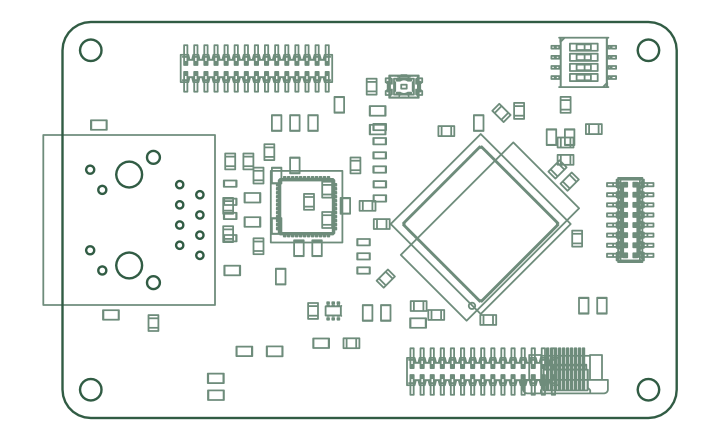
Je relie l’IA au monde réel : workflows, logiciel et électronique.
Du premier prototype à un système exploité au quotidien.
À propos ↗02 / IA appliquée
L’IA au service de votre façon de travailler.
J’intègre l’IA dans les workflows des entreprises : agents, assistants internes, traitement de documents et automatisations branchés sur vos outils, et jusqu’à vos capteurs, machines et bancs de test. Moins de copier-coller, moins d’étapes manuelles, la même rigueur.
- 01
Audit de workflow
Je cartographie vos tâches répétitives et repère où l’IA fait gagner des heures, pas des démos.
- 02
Jusqu’au matériel
Agents et serveurs MCP branchés sur vos logiciels, mais aussi sur le terrain : je conçois les cartes et le firmware qui font le lien.
- 03
Fiable par conception
Tests, garde-fous et validations humaines : l’IA reste un outil que vous contrôlez.
Les modèles avec lesquels je travaille
- OpenAI
- Anthropic
- DeepSeek
- Jev
- Kimi
- Qwen
03 / Services
De vos workflows jusqu’au matériel.
Automatisation IA et systèmes connectés : découvrez les deux façons dont je peux vous aider.
Voir les offres ↗04 / Blog